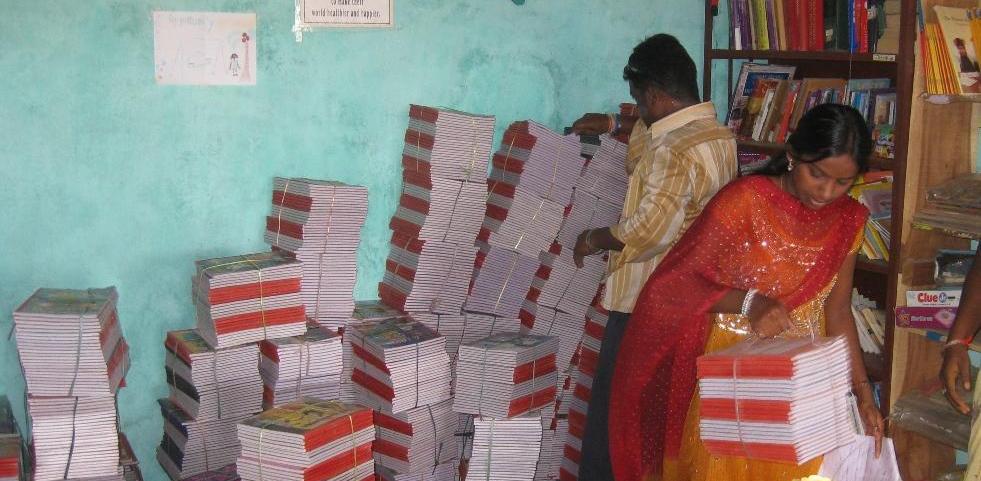
New textbooks for the 2008-2009 school year arrive at Maggi.
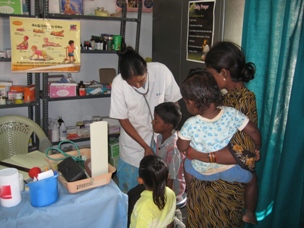
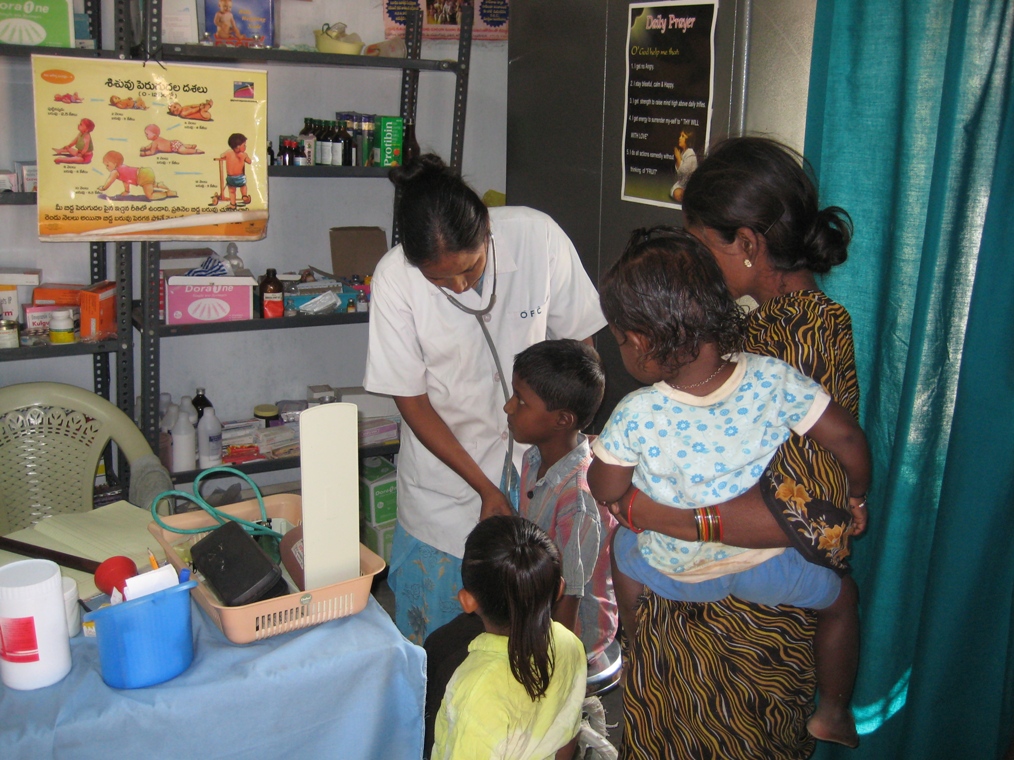
Pudma, our clinic nurse in
Shanthi Nagar slum
How do you help the poorest people? I suppose we all know that just giving them handouts or money will not work. It is usually spent immediately since they have no financial skills. Well, you help them to help themselves, right? Check out the United States welfare system. I’m sure it has helped some, but many complain about bad effects such as dependency, loss of work ethic as people learn to "work the system", promotion of fatherless families, etc. Most talk about tremendous costs and waste in the system.
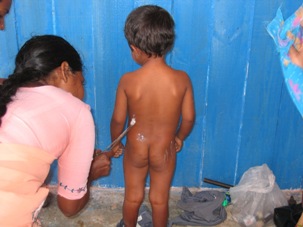
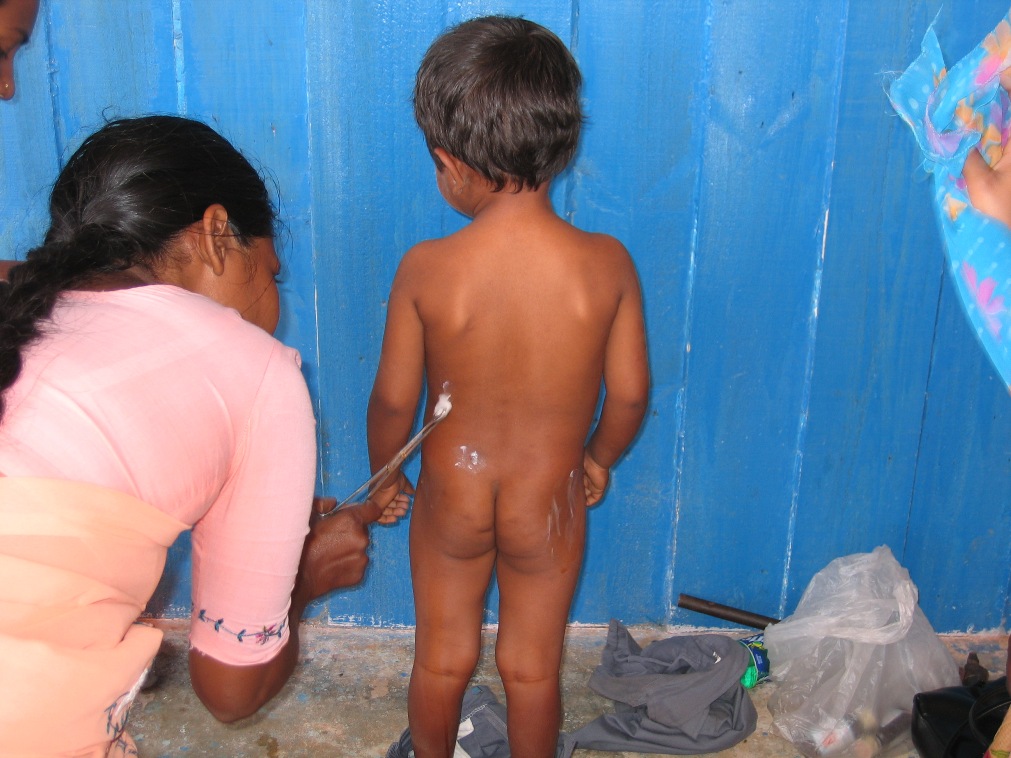
Some children come to us needing
a bit of work
We cannot produce a welfare program of any kind. First of all we are a small NGO with limited resources. We are not sure we have the skills to tackle a job where so many presumably expert people have failed or at least partially failed in a country like the U.S. Do you think it is going to be simpler in India? We took the easy way out. We work with the children of the poor.
"I had the most extraordinary experience of love of neighbor with a Hindu family. A gentleman came to our house and said: 'Mother Teresa, there is a family who have not eaten for so long. Do something.' So I took some rice and went there immediately. And I saw the children – their eyes shining with hunger. I don’t know if you have ever seen hunger. But I have seen it very often. And the mother of the family took the rice I gave her and went out. When she came back, I asked her: 'Where did you go? What did you do?' And she gave me a very simple answer: 'They are hungry also.' What struck me was that she knew – and who are they? A Muslim family – and she knew. I didn’t bring any more rice that evening because I wanted them, Hindus and Muslims, to enjoy the joy of sharing."
Mother Teresa
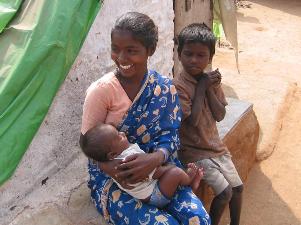
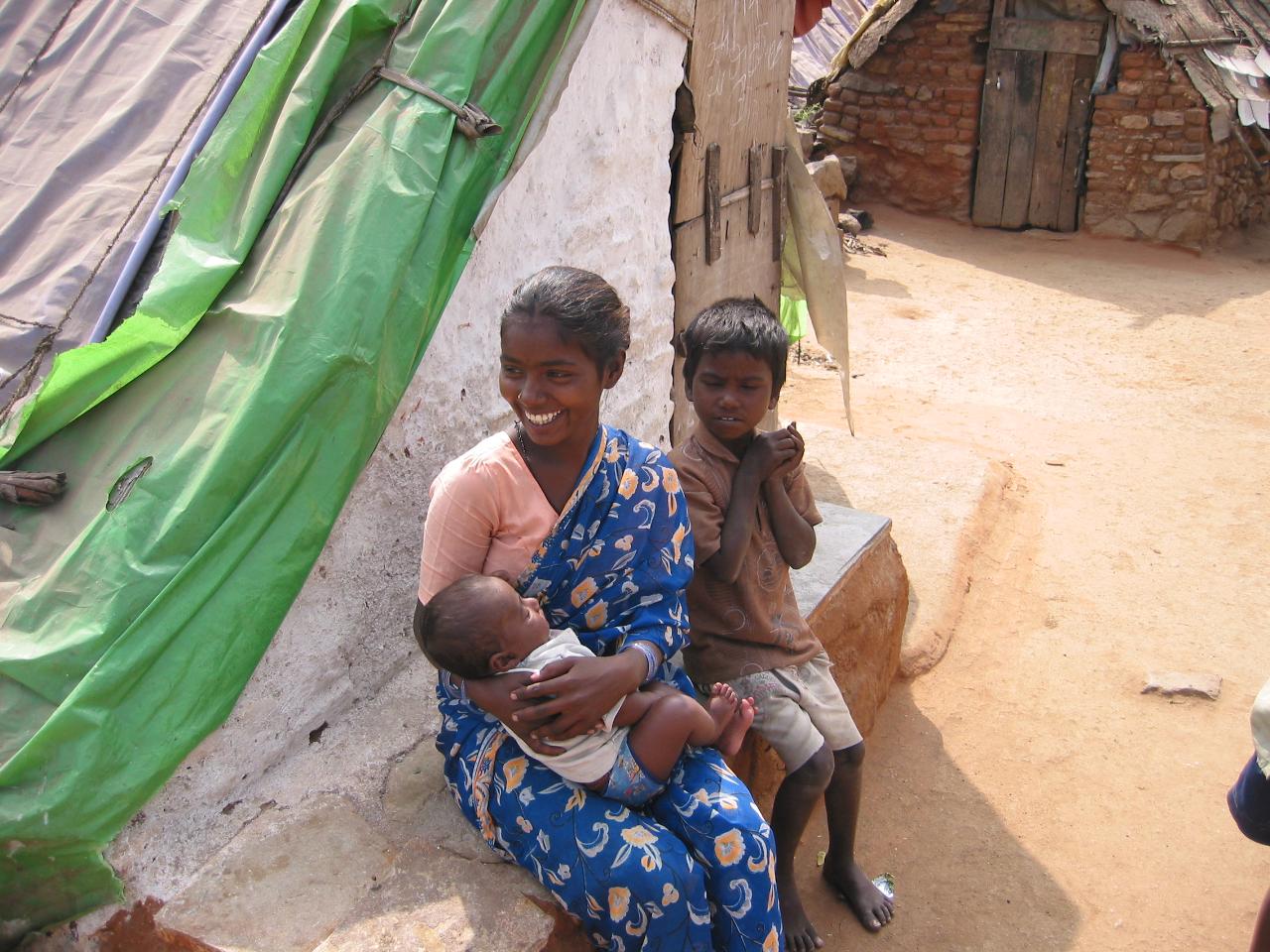
Mother and sons in a slum
Children in the slum can have a pretty strong family life in a supportive community. The slums, while poor, can be a happy place as well. As in stories you may read about the Old West in the United States, life is hard and many families depend on and help each other. This understandably leads to friendship. Mother Theresa was well aware of this, calling it the “
joy of sharing”. I can remember a Sunday when nearly all the men were off from work and everyone in the slum was out visiting with each other and with us. It was a happy time.

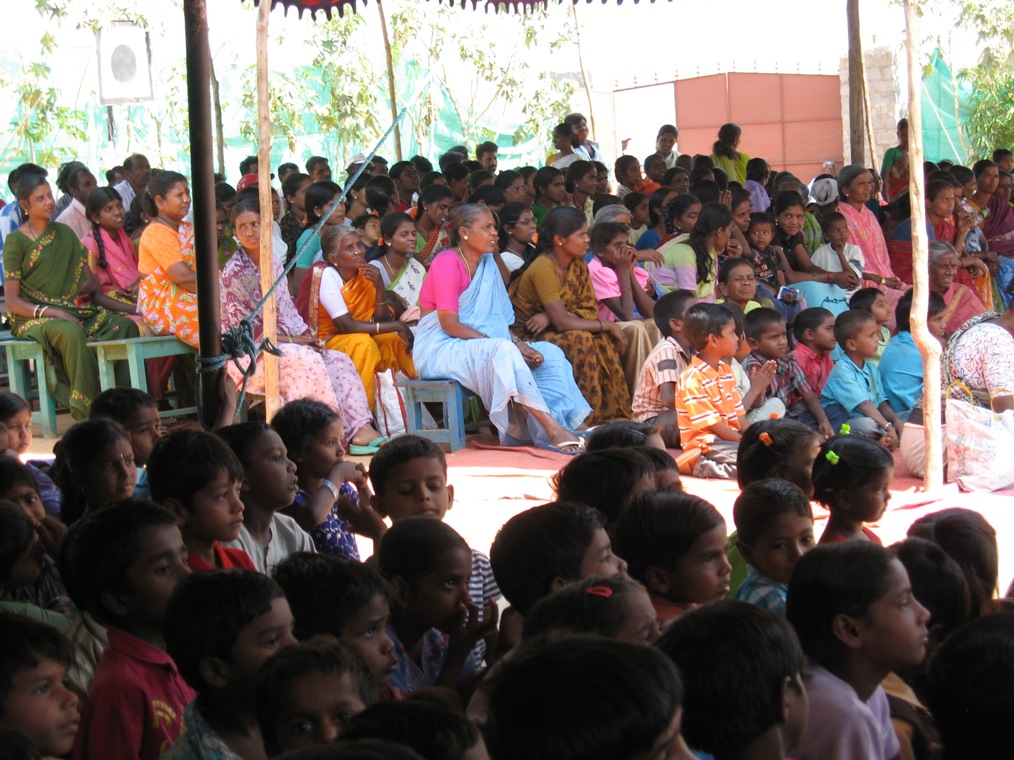
Mothers at a school meeting
What slum children often do not have is medical care, enough food and education. That is what we do. No worries about developing dependency. Children are dependent. Educating them to train them out of that condition is something that is straightforward, especially with eager kids like ours. In addition, it takes only a few years to start really seeing results. Just look at our graduates.
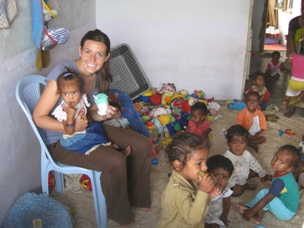
A volunteer's work is never done.
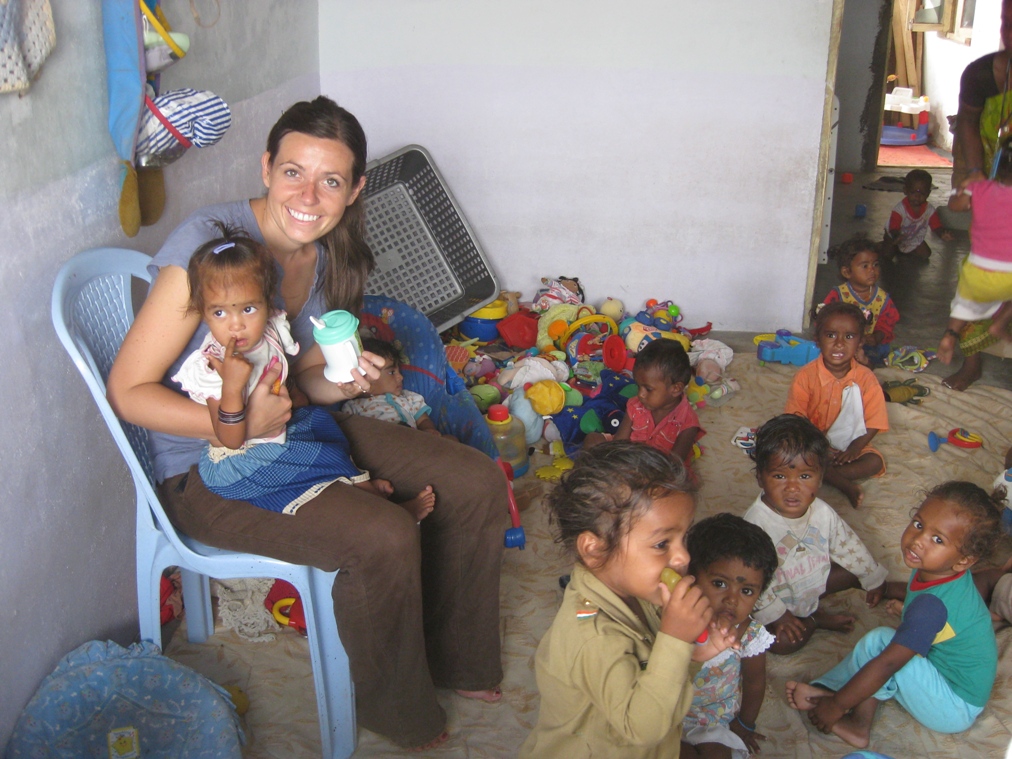
Liz at the baby care center.
A young person from the slum is not only hampered by poor education, but also their appearance. Low caste and darker skin are one issue, but the main thing that sets them out is their overall appearance. They are very thin, even emaciated looking. They often appear to be miniature people. Reading about the brave knights of old shows the same thing. The famous knights and warriors were often described as “head and shoulders above lesser men”, “of comely appearance beyond ordinary men” and “having the strength of many”. I think this was actually the case, but not due to their ancient lineage or being the sons of royalty. They grew up in households where there was enough to eat.
If we are to change slum children into normal middle class citizens we must feed as well as educate them, especially during their younger years. This is why we have our comprehensive lunch program and also why we have nursery schools and kindergartens where the younger children are also fed.
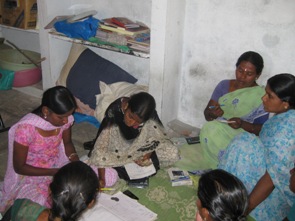
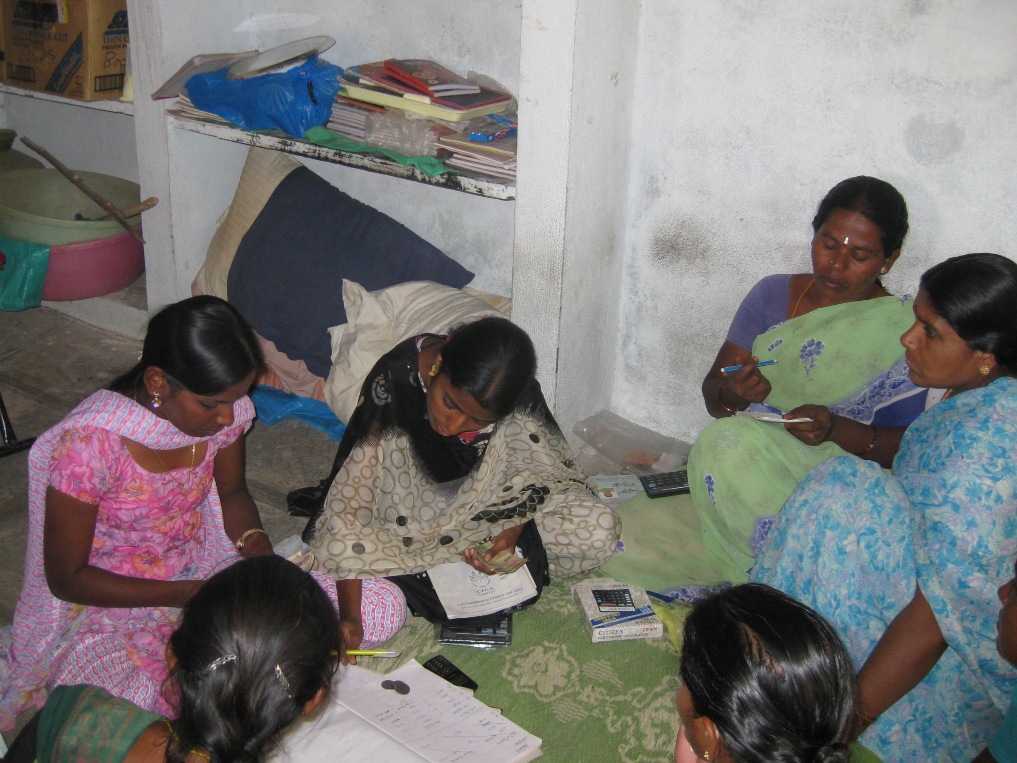
Uma and Rajita work with slum
women on a savings program
That said, we don’t ignore the parents. While we do not need to teach them to love their children more, we can teach them more about hygiene, how to start thinking more than a day ahead, how to set aside money so they can avoid punishing rates from the moneylenders when a family member gets sick, etc. We take care of the child, but if we learn of a sick parent we help as well. We formed a group of women who save and lend to members to start businesses. These are not the main things we do, but we are part of the slum community and need to share just like our neighbors do.